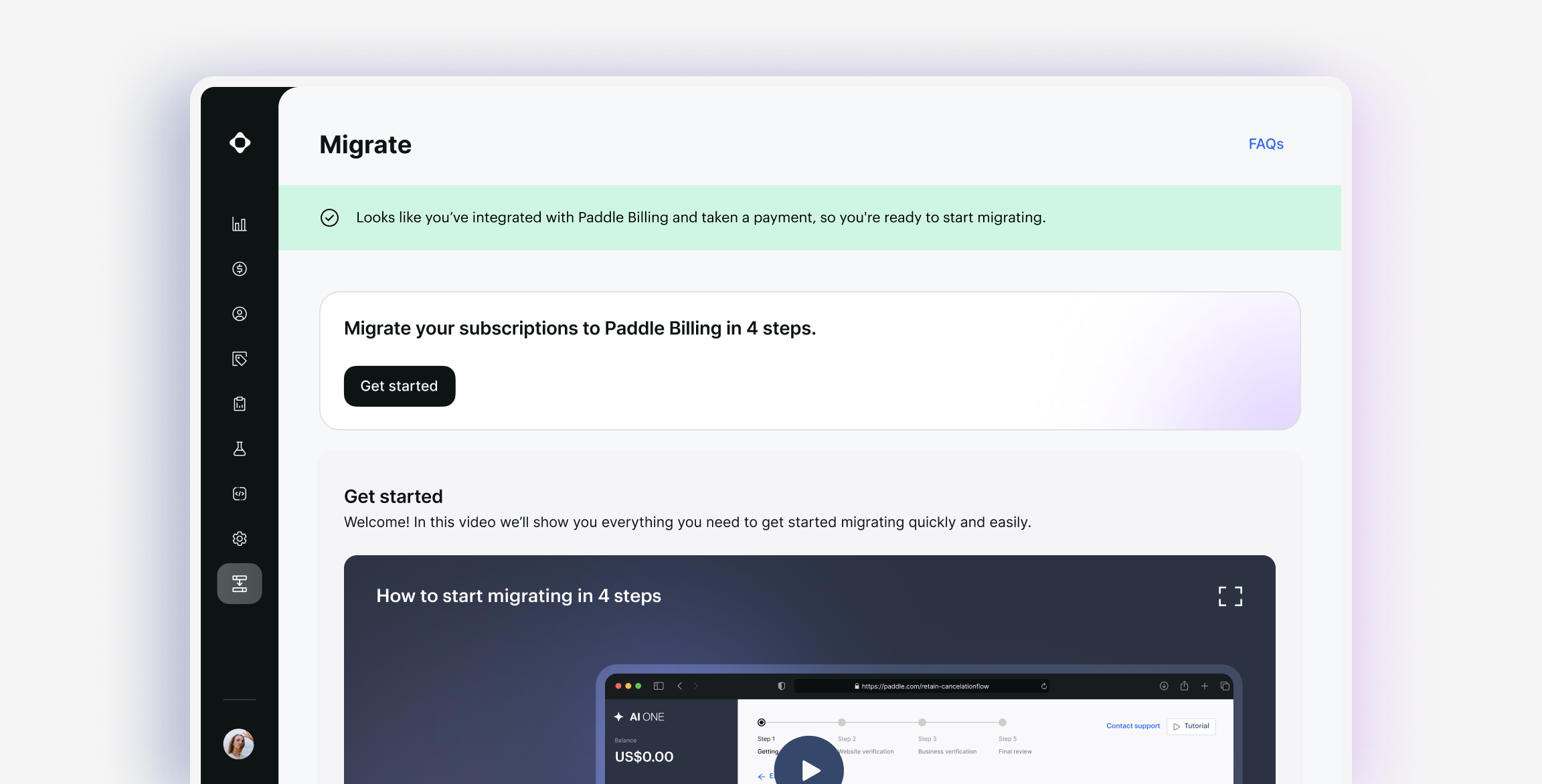
The Problem
"Customers on Paddle Classic wanted to grow but migration was complex, risky, and entirely manual."
Paddle's new billing platform offered advanced features that Classic customers couldn't access. But migrating felt daunting: custom billing logic, live subscriptions, and a small dedicated migration team created friction, anxiety, and risk of churn. Paddle needed a way to empower customers to migrate themselves quickly, safely, and with confidence.
My Role
- Senior Product Designer — end-to-end ownership of the experience
- Discovery & research lead — customer interviews, discussion guides, data analysis
- Workshop facilitator — 2-part cross-functional ideation with engineering, PM, support and solutions
- Prototype lead — 4 iterations built and tested with real Classic customers
I owned this project from first discovery session through to shipped product. Working alongside a PM and a 7-person cross-functional team, I led customer interviews, synthesised findings into clear design principles, facilitated two ideation workshops, and built 4 prototype iterations each tested with real Classic customers. The result was a clean 4-step self-serve flow that made a daunting process feel manageable.
Process
Discovery
Interviewed 10+ Classic customers using a discussion guide I built from scratch. Pulled migration candidate data from Snowflake to identify the ideal self-serve cohort — customers with under 10k subscriptions and standard billing configurations.
Ideation Workshop
Led a 2-part cross-functional session with engineers, PMs, support, and solutions. Two clear migration approaches emerged which we merged into an ideal user flow and stress-tested against real customer scenarios.
Prototype & Test
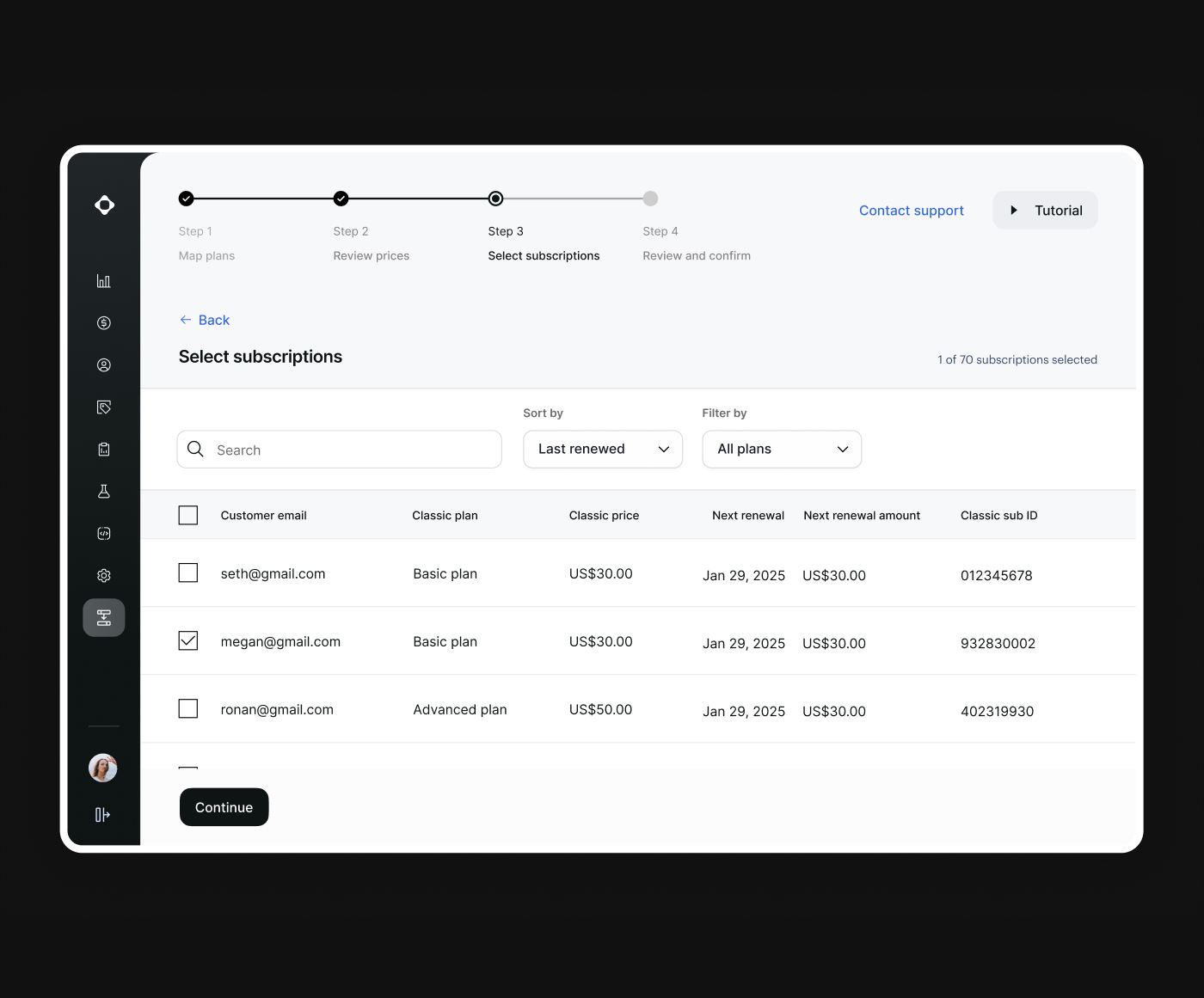
Built 4 prototype iterations, each tested with Classic customers before moving forward. The critical insight from round two: customers didn't want Paddle to choose who migrated — they wanted control over who migrated and when. We redesigned around that.
Refine & Ship
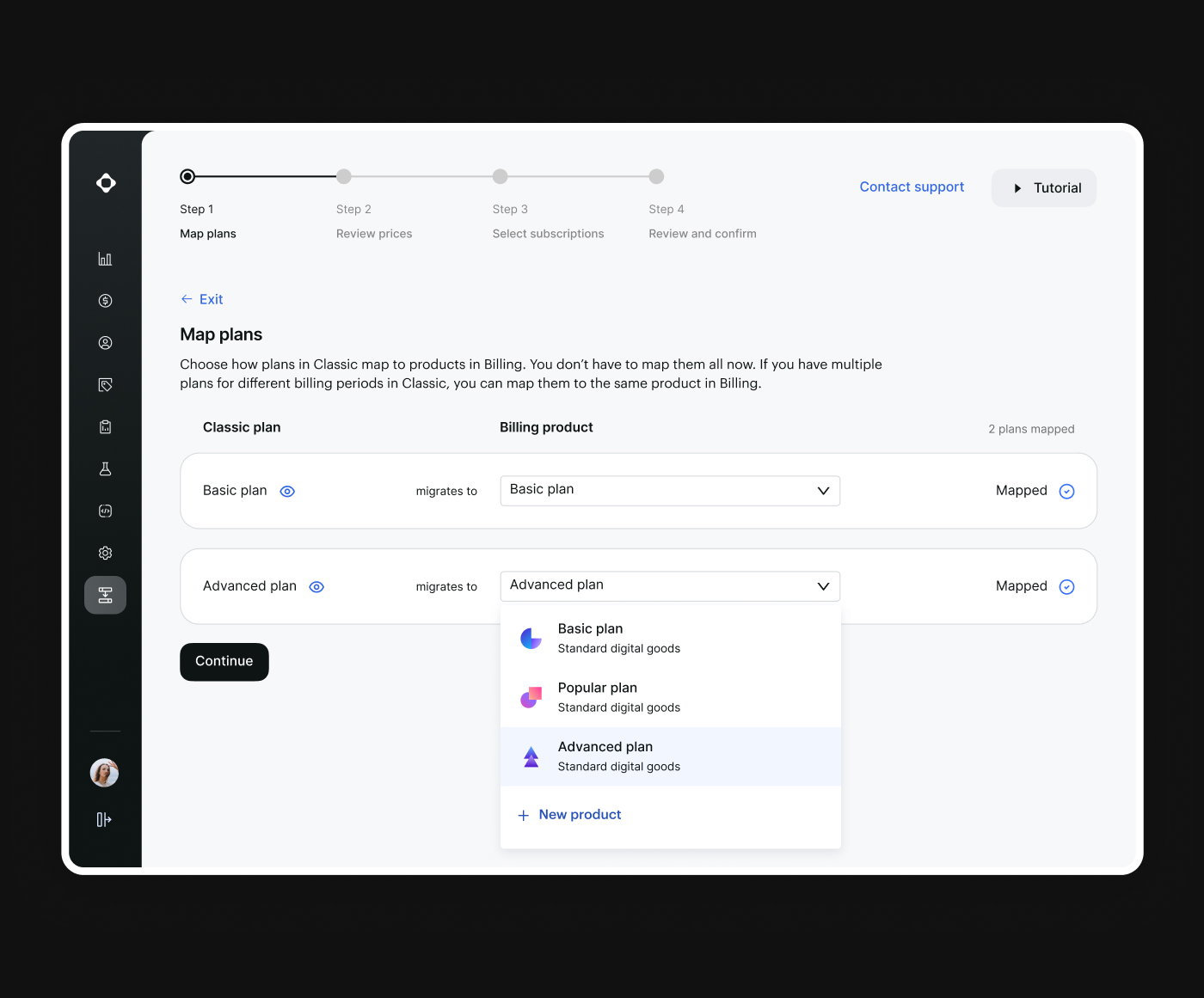
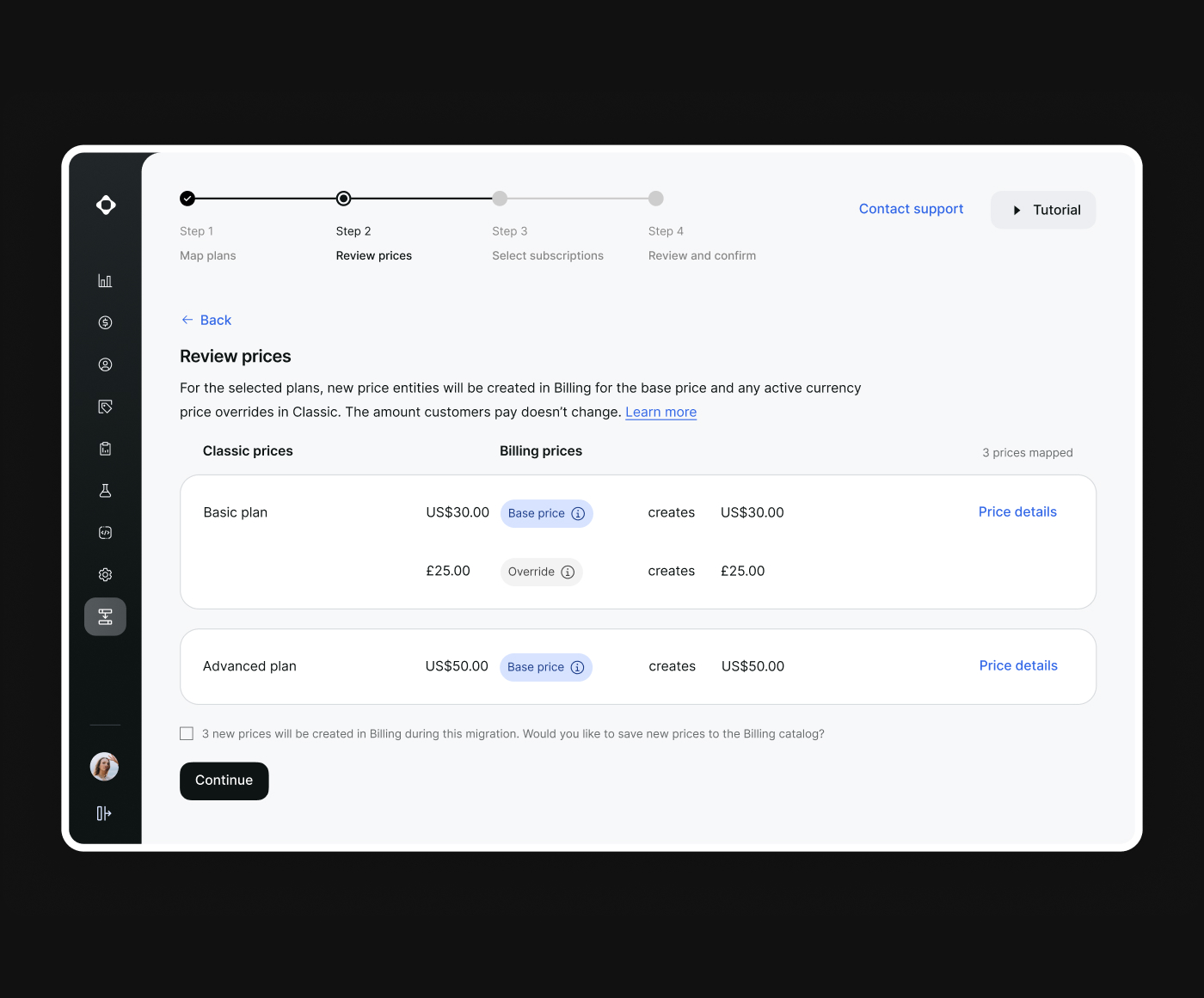
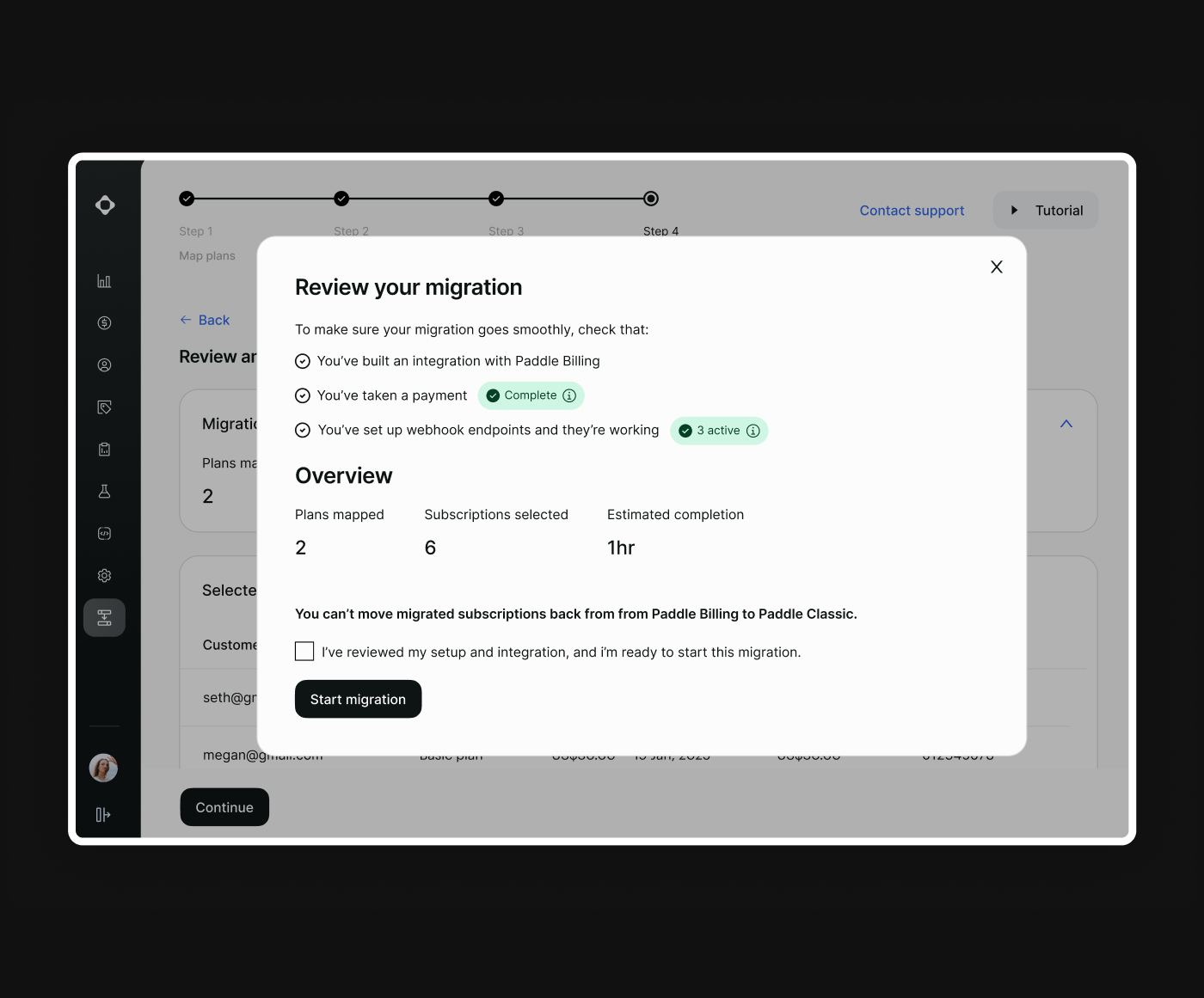
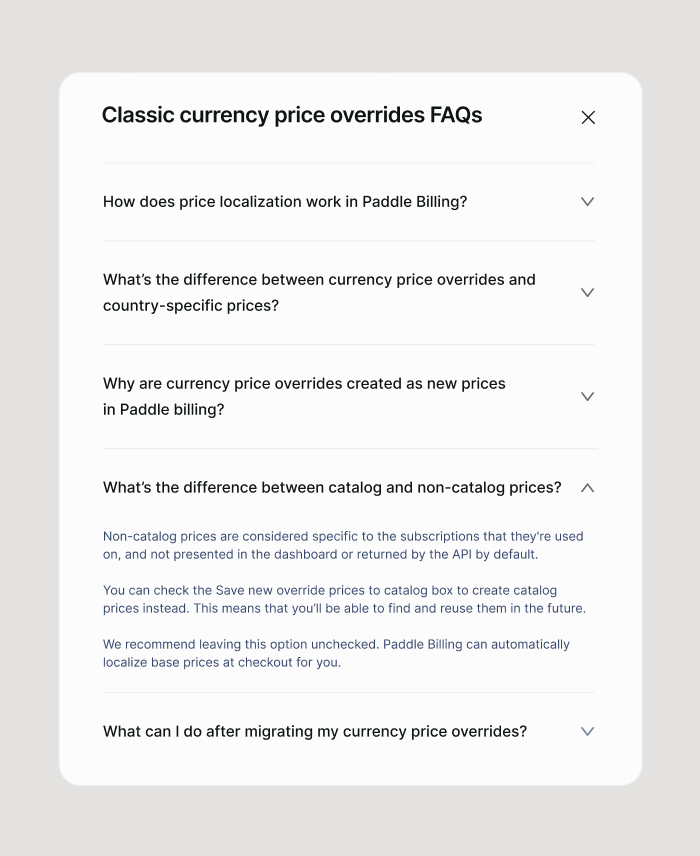
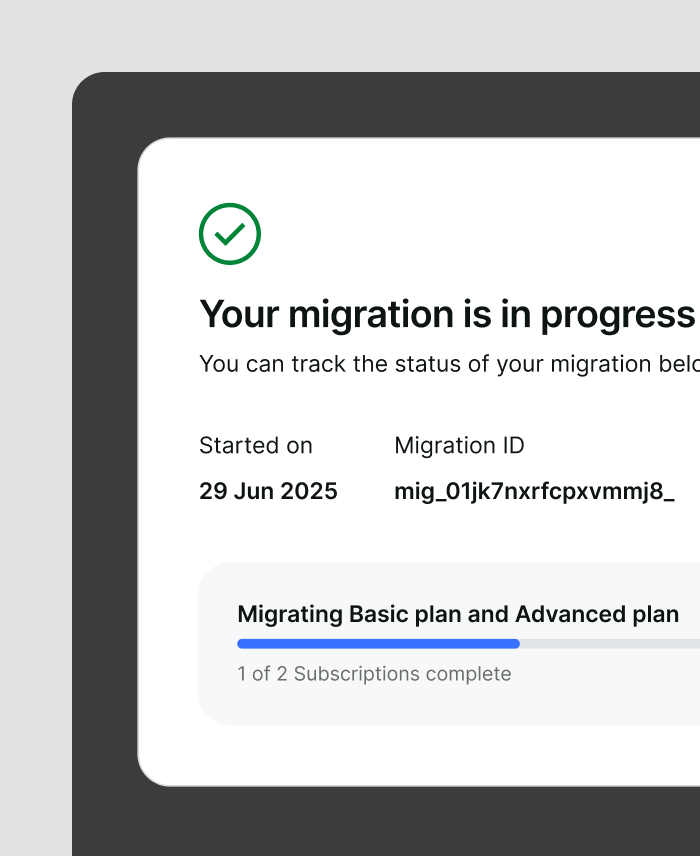
Distilled the validated flow into a clean 4-step migration journey. Embedded contextual FAQs and documentation at each decision point, added progress tracking to reduce anxiety, and designed email notification triggers for post-migration confirmation.
Research
Discovery was grounded in direct customer conversations and platform data building a clear picture of who could migrate and what would make them confident enough to do it.
- Early discussions with small and medium-sized sellers to understand migration anxiety and blockers
- Pulled raw data from Snowflake to profile which customers were best suited for self-migration
- Mapped hypothetical user flows alongside technical considerations with engineering
- Usability testing with early concepts and prototypes to validate confidence and clarity
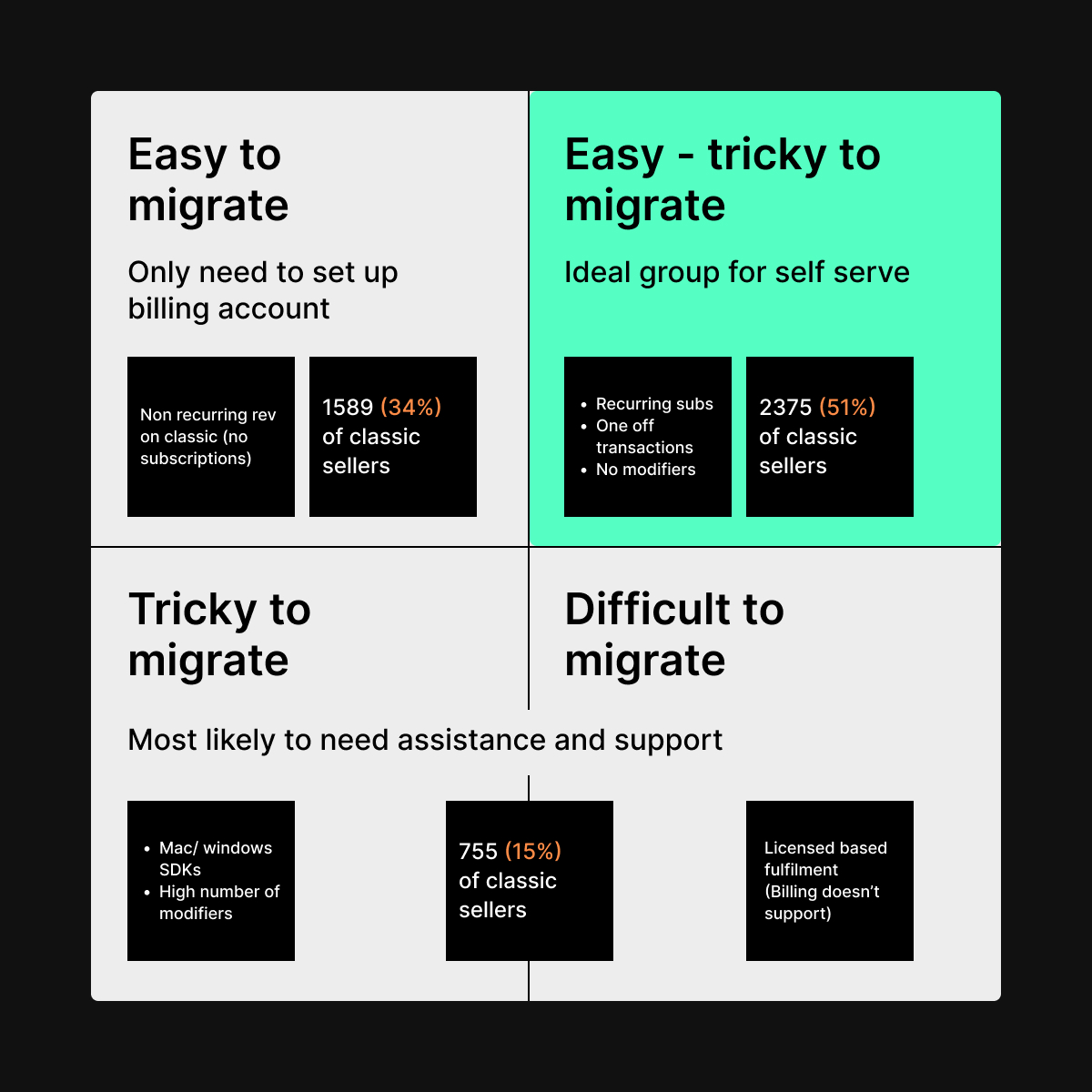
Summarised data and target group.
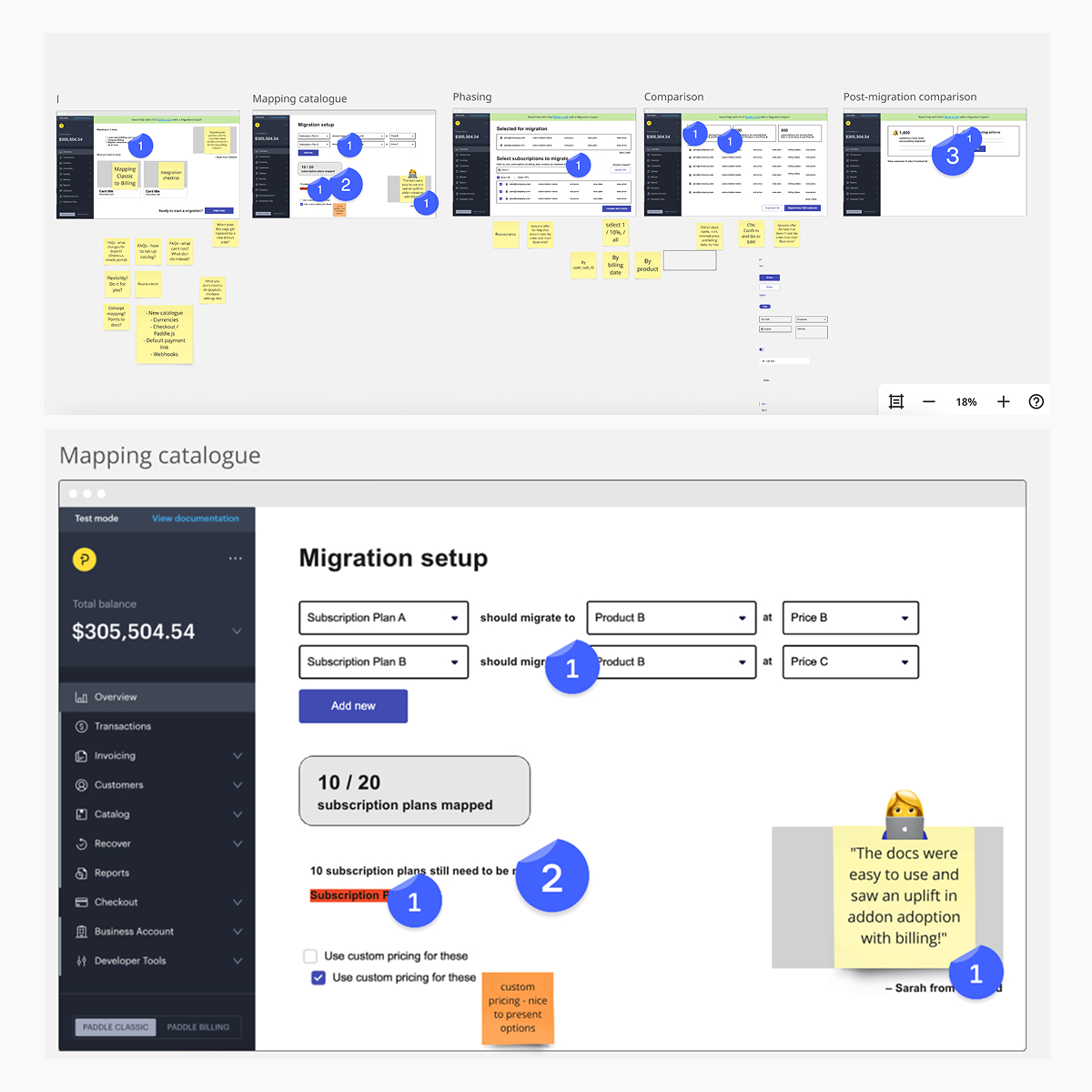
Workshop flow example.
Research Findings
Through 10+ customer interviews and analysis of migration candidate data, a clear picture emerged of what made customers hesitant and what would give them the confidence to move. These findings directly shaped every design decision that followed.
- Customers feared losing custom billing logic built up over years
- Lack of visibility into what would change created anxiety
- Trust in the process was low — customers wanted proof before committing
- Support-led migrations felt slow and out of the customer's control
- Customers wanted to choose timing — not be pushed through a schedule
- Clear progress indicators significantly reduced perceived risk
- Contextual help at each decision point was more valued than generic docs for some
- Post-migration confirmation gave customers closure and built lasting trust
Key Highlights
Migration is emotional, not just technical
Customers weren't just worried about data they feared losing revenue and customers. Trust had to be built before they'd commit to migrating.
Control reduces anxiety
Customers wanted to choose who migrated and when. The assumption that they'd want us to handle it was wrong, autonomy was the key to confidence.
Speed was important
Highly motivated customers didn’t want migration to slow them down, they needed it to be both fast and reliable so they could focus on growing their business, knowing they wouldn’t revisit it again.
Ideation
Early concept exploration and wireframing translating research insights into initial design directions before committing to a final approach.
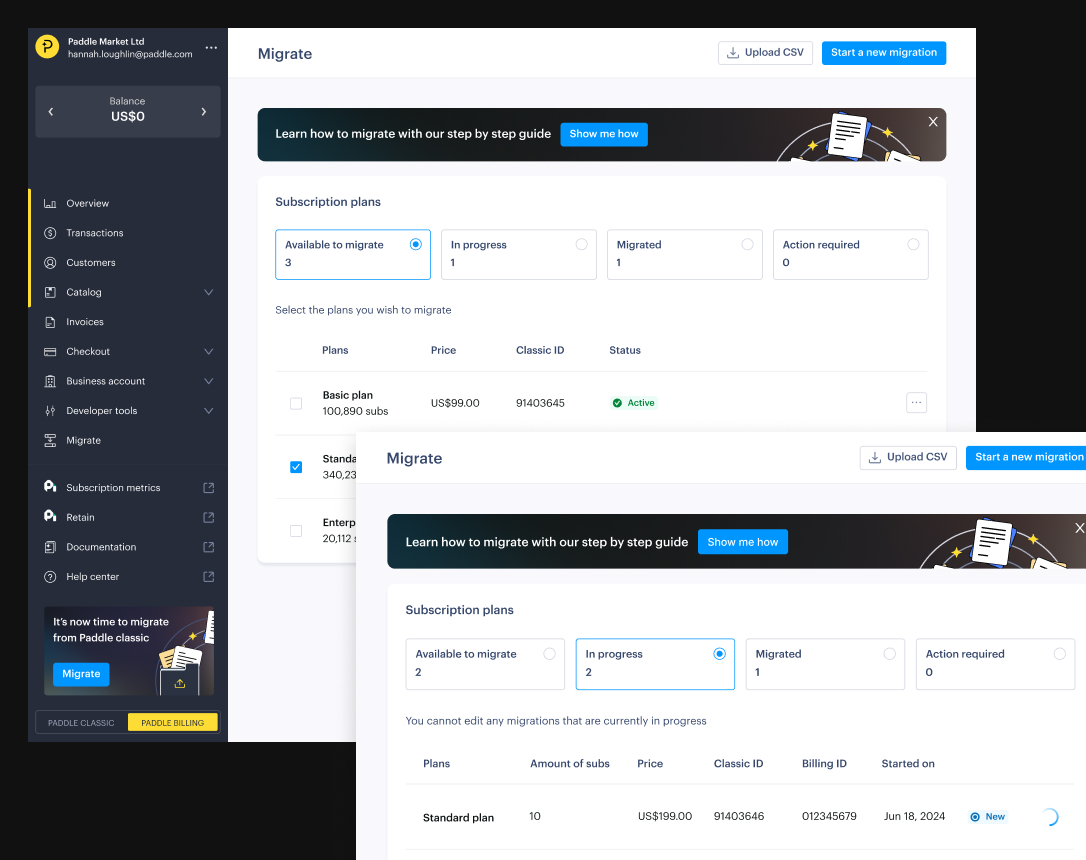
Samples from prototype one.
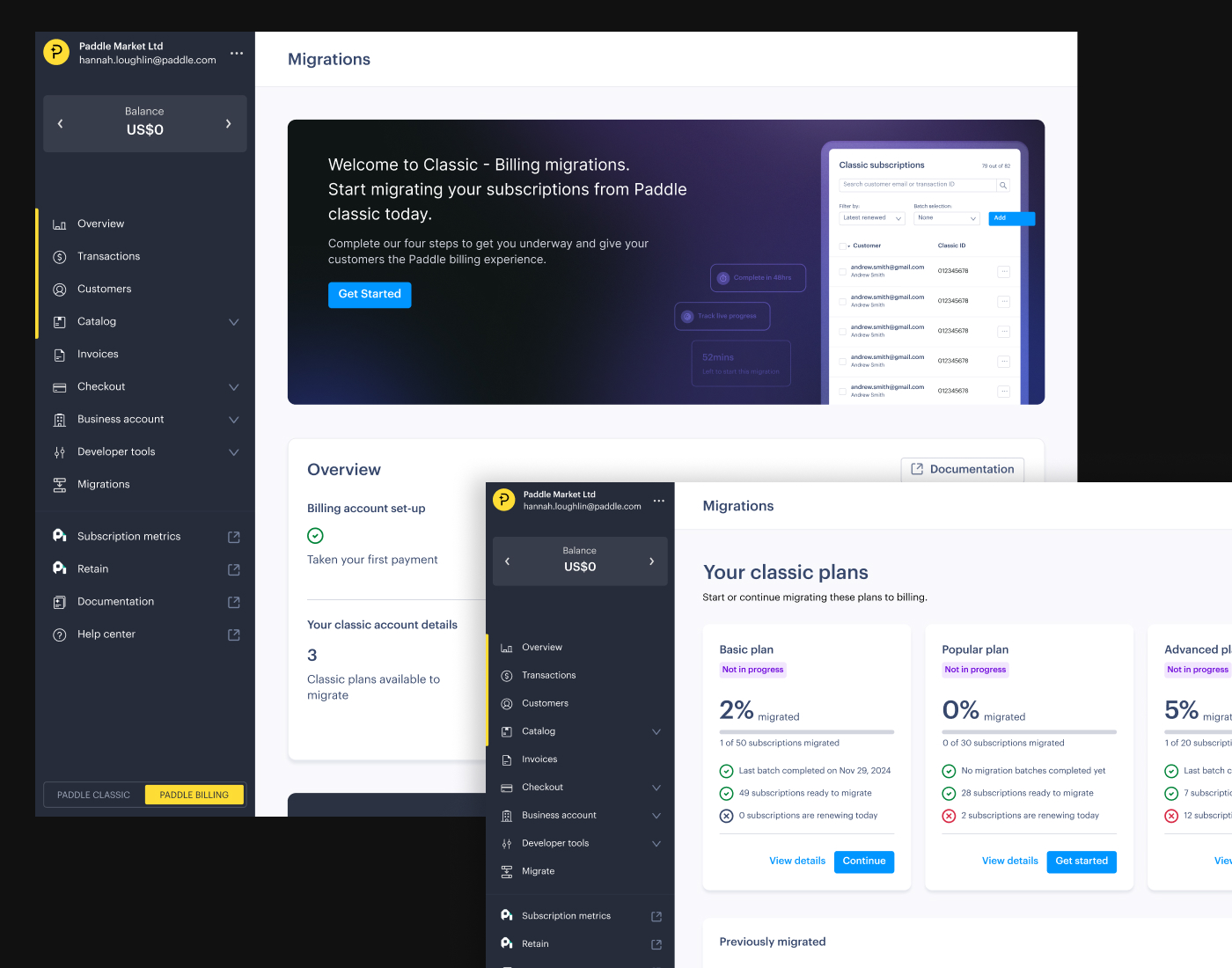
Samples from prototype two.
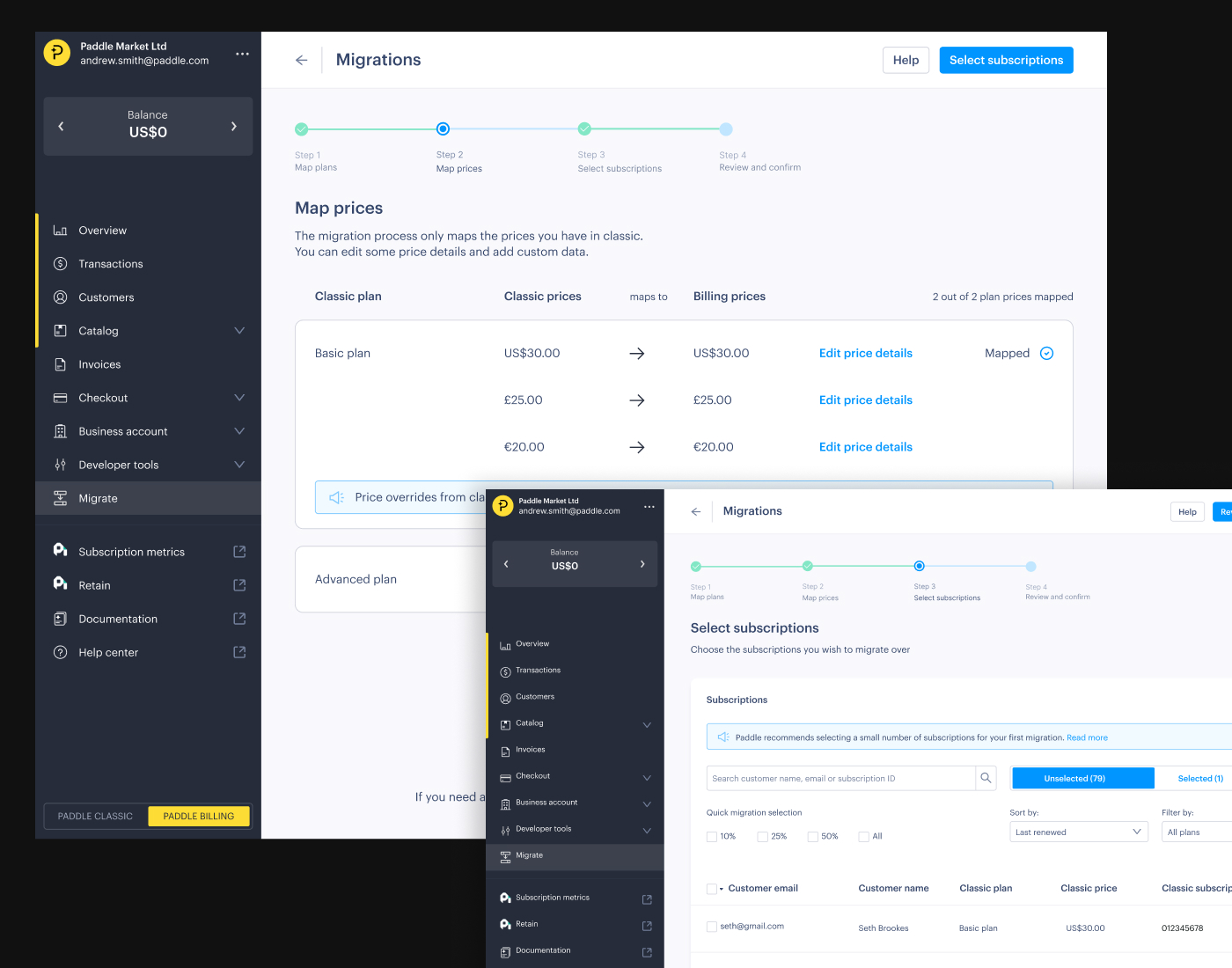
Samples from prototype three.
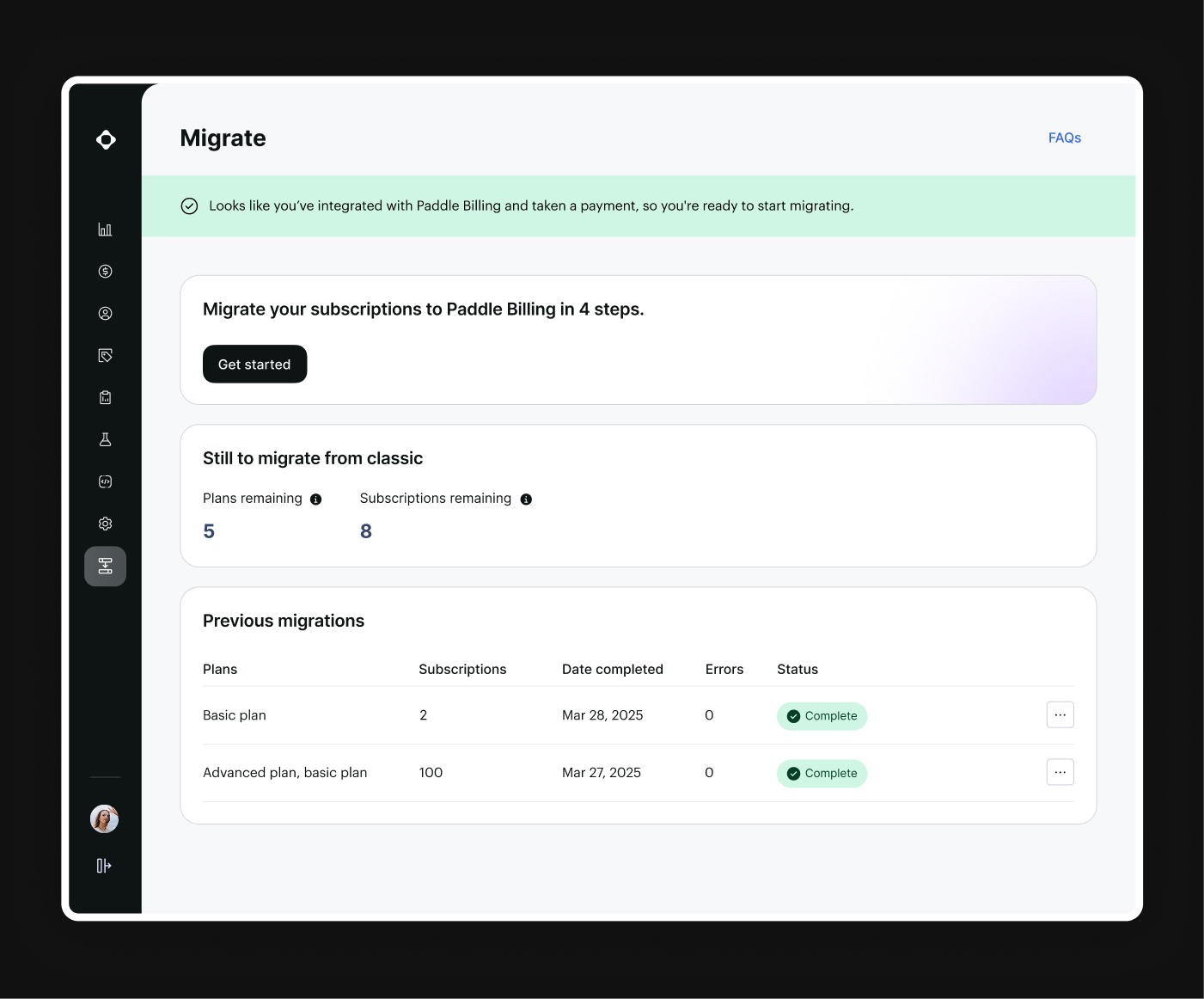
Final Designs
Selected screens
Outcome
80% of legacy Paddle customers can now migrate themselves — reducing support overhead and accelerating Paddle's path to IPO.
- Unlocked advanced billing features for the majority of Classic customers, removing the most common barrier to upsell
- Reduced operational costs by building the bridge from old to new platform giving customers a faster path to grow their business
- Strengthened long-term growth and IPO readiness by eliminating a significant legacy technical and commercial debt